I’m taking the rest of the year to be with family and friends, so this is where I bid everyone a lovely holiday season, whatever you celebrate, and a happy new year. Here’s hoping 2017 is good to us all. See you back here January 2nd!


I’m taking the rest of the year to be with family and friends, so this is where I bid everyone a lovely holiday season, whatever you celebrate, and a happy new year. Here’s hoping 2017 is good to us all. See you back here January 2nd!


{Once again, let me preface this by saying I am not the definitive authority on this topic. I am one woman with an opinion who provides care to adult and adolescent domestic violence and sexual assault patients. At the end of the day, you need to decide the best course of action to take for your practice and patient population. Hopefully, this spurs some discussion, where needed, as that is its intent.}
So I was asked by an FHO reader if I would comment on the best way to document the narrative portion of the history. That is, the history of the patient’s chief complaint. Always up for stepping into the abyss, I said, sure–why not? After all, it comes up in pretty much every single testimony workshop I teach.
Perhaps the best way to begin this discussion is by saying, I don’t necessarily believe there is one right way to document the narrative history of the assault. Some of you out there write down everything the patient says, verbatim. I think that’s weird, but I don’t necessarily think it’s wrong.
Why do I think it’s weird? Because I personally can’t listen to a patient and also transcribe everything the patient says. When I do that, I miss all the rich, non-verbal communication that happens, and that impacts patient care. But that’s just me. Also, most people aren’t terribly accurate at capturing every single word the patient says, which I imagine defeats the purpose of choosing that method in the first place. So for me, it feels like a missed opportunity to connect with a patient as a person (and not a crime scene or a complainant), and begin the process of assessing their well-being.
My preference is to summarize, except where my summary couldn’t possibly do justice to the patient’s account of events or state of mind (threats, fear, etc.). Then I add quotes. This gets me where I need to be to take care of this patient in the most comprehensive way possible. And since the purpose of obtaining the narrative history of the assault is to guide my exam process, focus any sample collection the patient may desire, and inform the patient-specific discharge and follow-up plan, I don’t feel like I could more effectively accomplish any of that if I wrote down what the patient said verbatim.
I do think there are some wrong ways to approach narrative documentation, though (and I see them all in my travels):
So if I was going to summarize, I’d say this: if you have a clinical rationale for documenting in your particular style, you’re probably just fine (assuming your work is also being peer-reviewed). If your approach to documentation of the narrative history is dictated by any non-clinician professionals (e.g. law enforcement or prosecutors like you to document in a certain way), or you see its purpose as being primarily for the investigation and prosecution of the reported crime, I think that’s problematic. And if your approach simply doesn’t resemble healthcare at all, well, it may be time to reassess.

Oh hey–it’s the week before Christmas (how did that happen?!). I will be working this week, but hopefully next week is vacation time, so that’s where my brain is right now (#freelancerproblems). I had a relatively lazy weekend, what with the ice storm that hit DC on Saturday. So much surfing of the web occurred. Here’s what caught my eye since last we spoke:
Merriam-Webster’s word of 2016 is pretty spot on
Speaking of the word of 2016, I cannot believe I might need have to actually worry about this
(Related)
Leadership hacks worth considering
Why not say what you mean?
The problem with Exceptional Women
So-called identity politics are more than some made-up liberal construct
Fake news, deconstructed
The powerful new cover story from NatGeo
I love Jessica Luther’s work on sexual violence
There’s a whole group of docs who are going to hate this study
I was just introduced to this quote and I am 100% certain nothing has ever been more true

OVCTTAC has a revamped website with a dedicated section to SANE-SART resources. It includes the SANE Program Development and Operation Guide, among other resources. It is a multimedia site, so there are videos, as well as archived webinars on a variety of topics. Worth perusing for sure.

The Battered Women’s Justice Project has an upcoming webinar, Nonconsensual Pornography: Circulating Sexual Violence Online. The session will be held January 24th from 2-3:30pm CT. From the website:
Pornography, much like sexual violence, is pervasive, especially in online spaces and has evolved to include content that is both consensually produced and disseminated as well as that which is not. Accordingly, in this webinar, presenter Amber Morczek will define nonconsensual pornography (often referred to as ‘revenge porn’), how it impacts victims, what is being done to address it, and how it relates to rape culture.
Register for the webinar here. Note: space is limited.

99.9% of the communication I have with FHO readers is overwhelmingly lovely, but every now and again I get something a little less pleasant. Like a comment that perhaps I should stick to talking about forensic nursing, and leave the politics out of it. So I want to be clear: I am a progressive. I believe healthcare is a human right. I believe economic equality cannot occur if women don’t control their own bodies. I believe that political correctness is actually another term for respect for all, and isn’t something that should be sneered at. I am a proud Army wife and support our troops. I believe in the 2nd Amendment, but I don’t believe it allows for unregulated gun sales and ownership, and I certainly don’t believe you can wave the 2nd Amendment in my face and not also remember there is an equally important 1st Amendment. And I believe in intersectionality–that poverty, racism, sexism, ableism, homophobia and transphobia all impact the health of our patients along with the violence they’ve experienced, and if we truly want to care for our patients, we can’t just care for the one without addressing all the others.
That being said, this is my site, and it is unaffiliated with any agency or organization. I speak solely for myself and as long as that’s true, this site will include “politics”. Because politics impact our patients’ lives, and particularly in these times, I believe it is imperative that we remain vigilant in working towards the health and safety of all people. FHO is not a vanity project; it exists in service to the profession I love. But having an opinion, taking a stand, this is what allows us to move the work forward. Apathy and a refusal to commit to an ideal–these are the enemies of progress.
So now that we’ve gotten that out of the way, here’s what’s caught my eye since last we spoke:
Heroin deaths have officially exceeded gun deaths in the US
The so-called women’s magazines are killing it right now in the political commentary arena
Despair and hope (Related)
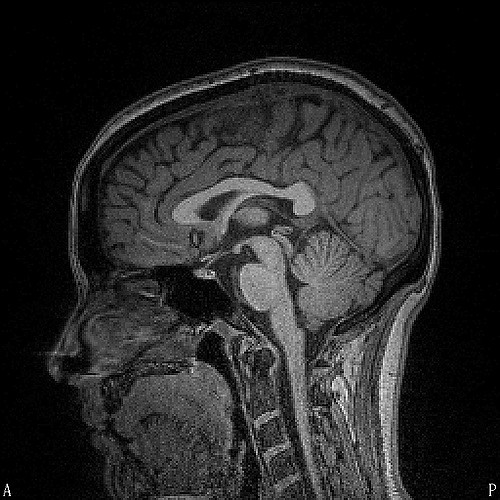
That pesky hippocampus
Pickle juice! (so good)
The future of reproductive health?
If you haven’t read When Breath Becomes Air, do.
System failures seem to always be part of the story

I received a question from a reader about choosing a training for prospective members of her SANE team. She had heard that there were some trainings out there that didn’t meet eligibility requirements for SANE certification and wanted to avoid them, but wasn’t sure what to look for. I agree that not only is it important to identify training that meets certification eligibility criteria, it’s also important to have some sense about quality in general (I promise you–not all SANE trainings are equal). So I encourage everyone to refer back to this guest post from 2009, which is as relevant today as it was more than 7 years ago (make sure to read the comments, too). Considering the sheer number of new subscribers we’ve had just in the past 2 months, it’s probably worth posting again, regardless. Enjoy!
{Post edited to update links.}

EVAWI just put out a bulletin on the neurobiology of trauma (PDF) that, while geared toward investigators, can serve as a good primer on the issue for clinicians, as well. From the email announcement:
…[T]his 38-page document provides basic information about the brain and explores the impact of trauma on behavior and memory. It then highlights the implications for law enforcement interviews conducted with victims of sexual assault and other traumatic crimes.
The training bulletin was written by Dr. Chris Wilson, Dr. Kim Lonsway, and Sgt. Joanne Archambault (Ret.), with contributions by Dr. Jim Hopper. It was reviewed by experts from a variety of professional disciplines, including psychology, law enforcement, and prosecution. We hope you find it to be a useful resource, to enhance your understanding of these critical issues.
With an understanding of how the brain responds to trauma, and an appreciation for how trauma affects memory encoding, storage and recall, we now have the potential to become truly “trauma informed” in our interviewing practices.
I think the reference section is particularly useful for clinicians, especially those testifying as an expert on this issue. However, to be clear, I am very skeptical of most forensic nurses testifying as experts on this topic unless they know the science backward and forward–that means being able to speak to the literature that challenges some of these ideas, as well as the literature that supports it. (I feel like I’m pretty well-versed in this issue; I do not provide expert testimony on it.) Reading a monograph like this, or attending a training, does not make one an expert. It’s useful information to help understand patient behavior and the workings of the brain in the face of trauma, but proceed cautiously with how you use it in court.

In looking for something completely unrelated, I stumbled upon this infographic from Elsevier on how to read a scientific paper. I certainly spend enough time talking about how important this skill is to develop when I discuss defensible practice and testimony. I like this resource because it acknowledges up front that this is unlike other reading we do in our lives. It’s particularly good guidance to follow for the articles upon which you plan on relying in court (or the ones you will highlight to justify changes to clinical practice):

This week is pretty hectic (due dates, holiday mandatory fun, etc.) and we spent part of the weekend working in anticipation of it all, but there was still time to surf the interwebs (hello, procrastination). Honestly, I find my twitter feed overwhelmingly depressing, but somehow I still can’t look away. Here’s what’s caught my eye since last we spoke:
I’ll never watch Sailor Moon with my nieces in the same way again
Some of the best (concise) presentation advice
It’s going to be years of essays like this
And also ones like this (I love her writing, btw)
Still some homicide rates that haven’t decreased
I wish…I have talked to many patients in my career who have made decisions based on inaccurate/nonsensical information; the Internet makes it so much easier to spread.
Medscape’s annual physician ethics survey (interesting)
We will forgive so much for football
Good on Merriam-Webster (I love their Twitter feed)
Still way too many stories like this one
And finally, many of you have asked about the new pup–I suppose it was inevitable, he has his own Instagram account (100% Sasha’s doing). Also, he’s great 🙂
{BTW, you’ll also find me on Insta; it’s mostly travel, dogs and food, but isn’t everyone’s? You can also get there by clicking on the Instagram button at the bottom right corner of every page (Follow FHO on Social Media)}

I was asked an interesting question on the site recently. A reader wanted to know if delivering lab results was appropriate for RNs. There seemed to be some disagreement within the reader’s program about whether the results from any labs drawn during a medical-forensic exam could be delivered to the patient by the forensic nurse who obtained them. The answer is yes–I’m racking my brain trying to think of an instance where it wouldn’t be kosher, assuming there’s no hospital/agency policy that states otherwise. Not only is it appropriate for nurses to do so (and we do it all the time in other types of practice), but recent federal rules dictate that patients can bypass healthcare providers altogether for lab results and obtain them directly from the lab running the tests. In fact, patients can go into electronic portals and look them up on their own in many practices (both my primary care doc and my neurologist allow me to). I am unaware of any state that prohibits RNs from giving patients test results. However, you should refer back to your state Nurse Practice Act to assess your scope of practice, and engage your hospital/agency’s risk management professionals if need be.
That said, my hunch is here the issue is that someone has attached the word forensic to the results. And this is where I need to encourage everyone to slow their roll. Because we sometimes lose sight of the fundamental nursing aspects of our job when that word comes into play. Labs/tests/imaging happening in your own institution are being done for the treatment of that patient. While they may at some point be used in a legal setting, there’s no way for the clinician to know that at the time. Sure, these tests are forensic in nature—everything during the encounter that happens after the patient says they’ve been assaulted is forensic in nature. And everything is medical, because they’ve come in for care, and potentially sample collection for an evidence collection kit (if that’s something available and of interest to them). The two cannot be separated out, and trying to do so is a waste of time. When I get involved in a case going to trial, I will review the forensic nurse’s paperwork—and then I’ll ask for all of the other records generated at the point that patient presented. Triage notes, ED doc’s medical screening exam, any labs drawn prior to the forensic nurse getting involved—all of it. Because it’s all forensic at the point we’re going to trial, just like it was all medical when the patient came in asking for care.
We treat these patients, and our role in working with these patients, differently much of the time because we are so caught up in the legal implications of the work. I would encourage people to stop getting so wrapped around the axel on this, because two points are critical to remember:
1.) A small percentage of our patients will ever see the inside of a courtroom, but 100% of them have the potential to develop healthcare sequelae from the violence they’ve experienced (research is clear on this, from child abuse to elder abuse; trafficking, sexual violence, domestic violence—you name it)*. If you’re only focused on the “forensic” part of the job, you are doing a disservice to the majority of your patients. Take the potential legal implications of the patient encounter seriously, and perform the sample collection meticulously so that patients have all of the criminal justice options available to them if that’s the route they choose. But do not put patients in a position where they are receiving a lesser standard of healthcare than if they just wandered into any ED in the US because the focus is on the kit or the photography. Patients need and deserve the CDC-recommended standards for STI prophylaxis; access to emergency contraceptives; appropriate screening for nPEP; anticipatory guidance upon discharge tailored to their particular issues; and follow-up that’s more comprehensive than “see your primary care provider if you have any problems”. And not for nothing, but these things should be completed by the forensic nurse—the specialist in the agency who understands the interplay between the particular trauma this patient has experienced and the impact it may have on their health. I don’t have hard evidence to back this statement up, but anecdotally based on all the records I review, clinicians who take care of all of these things as a part of the medical-forensic encounter (rather than relying on the ED staff to handle it), simply have more healthcare-focused, complete exams.
2.) There is emerging research that suggests that patients have a better experience at the point of exam and better outcomes, medically and legally, when we are more focused on patient as patient than patient as crime scene (see basically everything R. Campbell and colleagues have authored for support). Focusing on the health and well-being of patients, providing them with choices, treating the whole patient rather than honing in on the body parts of greatest interest in a potential court proceeding, benefits the whole process.
Which brings us back to the original question—can/should RNs be providing our patients lab/test results. Don’t overthink this—be the very best clinician you can be; practice fully within the scope of your licensure and according to your (regularly updated) policies and procedures; attend to the whole patient and document accordingly. And ask yourself—would I provide patient care differently with other populations? If the answer is yes, perhaps it’s time to examine your approach.
*There isn’t a single statement I repeat more often than this one. Not by a long shot.
**Canada, Australia and others: does this differ for you guys? I obviously don’t know the answer to that.
***As always, this site is not intended to provide legal advice. We’re discussing the larger practice implications here. I am not the authority on your scope of practice, so again, refer back to your state nurse practice act and agency risk management for legal advice on this topic.

New from the Bureau of Justice Statistics, the report Crimes Against Persons with Disabilities, 2009-2014 (PDF). The one-page summary is also available for download. From the press release:
Crime Against Persons with Disabilities, 2009–2014 – Statistical Tables (NCJ 250200) is now available on BJS.gov. This report presents estimates of nonfatal violent crime (rape or sexual assault, robbery, aggravated assault, and simple assault) against persons age 12 or older with disabilities. It compares the victimization of persons with and without disabilities living in noninstitutionalized households, including distributions by—
Findings were based on data from BJS’s National Crime Victimization Survey from 2009 to 2014, which were combined with data from the U.S. Census Bureau’s American Community Survey to generate victimization rates.

Every year I like to put together a team holiday gift guide; the work we do is tough and the hours sometimes challenging, so finding opportunities to celebrate one another is particularly important. What follows are 10 things that have caught my eye (some of which I have already purchased). There’s a good mix of items for the whole posse, and ones for your individual gift exchanges. Enjoy!
These Are Things pins and patches: I am a big fan. Several of my people have received these in the past; a few more are going to see them in their stocking this year. My favorite is still this one. Super fun, super inexpensive.
Simple Scrap Notebook v1: If you’ve read previous gift guides then you know I am a fan of the notebook. We are in fact a notebook loving family, as my kid likes to say. I just bought this one for myself, because in addition to writing, I also have a hoarder sentimental streak that has me saving ticket stubs, restaurant cards, and the like. I actually make Sashsa a book like this for her birthday every year using a Moleskine–they’re her favorite so she’d probably notice if I subbed one of these in, but for everyone else…
Flight 001 Besame Pouch (or alternatively, Man Things pouch): Because who doesn’t need an extra bag to stash things? Good for travel (all the things one would need to be comfy on a long flight for instance); good for extra cords and electronics accessories that would otherwise get tangled or lost in the bottom of a backpack.
BaubleBar Ear Crawler: Terrible name, but pretty nonetheless. Just funky enough for my personal tastes, but still lovely and delicate looking. I would definitely rock these.
Microwave Popper: The gift you give your team. Awesome for those late nights when you’re sitting around waiting for law enforcement to come pick up a kit. Way cooler than the supermarket bags.
Bees Knees Spicy Honey: I am obsessed with this product. There’s a fabulous pizza place in our neighborhood that drizzles this stuff on top of their pizza and it is killer (honest). For the adventuresome eater in your crew–spoon onto soft, warm rolls with butter; over some stinky blue stilton; or on the popcorn you made in the aforementioned microwave popper. So. Good.
In the Company of Women: This is one of my favorite books of the year. Authored by the creator of the blog Design Sponge, at first blush it seems like a book strictly for creatives, but there are great lessons about leadership, entrepreneurship and life in general. I find it very motivating, particularly because it features so many women whose voices might not always be heard in traditional media. I bought it for myself, and am giving it to a few others this season. Bonus: great photos elevate the text. One look and you’ll know exactly who on your team would appreciate this gift.
Snail Tea Bag Holder: Leave it to Etsy to have fun, inexpensive gifts. As an obsessive tea drinker I think these are awesome. And because they come in a 5-pack, leave a few in your unit to put a smile on the face of your advocate colleagues who could probably use a cup of tea every now and again.
Dream Big Mug: The perfect blend of inspirational and in your face. Warning: language. Suitable for team meetings (at least my team meetings); not-so-suitable for clinic. But seriously–funny as &$%@.
The Big Ticket Item: Create Your Own Class: How much fun would it be to take your entire team out of the clinic and into a cooking/baking class? Everyone learning how to make Chinese dumplings or bread or pasta, together, away from work? Obviously it sounds glorious to me because I love to cook, but really, you could pick any type of class, just to get away, together, for one evening. This one is from Sur La Table, but you could probably do something like this in a variety of venues for a variety of budgets. Don’t discount the impact a little togetherness can have on the health of your crew.
Can’t wait to hear about the festivities in your programs. Here’s hoping everyone’s getting a little celebration this time of year!

Hope you had a lovely (extended) weekend. We had a great holiday, and although our trip home took 2.5 hours longer than normal (thanks, DC traffic), Hamilton might just be the chillest pup around. He slept the whole way home, and still slept most of the night.
This week brings us our annual team member gift guide, which I hope to have live in the next couple days. But 1st, here’s what’s caught my eye since last we spoke:
A beautifully written piece on race in the US
Also: self-care as an act of political warfare
Plausible alternatives to incarcerating women
How to spot a fake news site
Tomorrow is Giving Tuesday–how-to, even if you can’t
A different type of portrayal of domestic violence survivors
What we need right now: more compassion
Not the solution we need right now
Everyday tips for everyday people
And finally, some light during dark times:
{Sigh–watching the active shooter news unfolding at OSU as I go to post this. Madness.}

This Thursday is Thanksgiving here in the US. And with all the complicated history that holiday holds, it remains a time to take a hard look at the life I lead and express some real gratitude for what I have. I won’t lie–2016 has been kind of awful in many ways: I lost one of my very best friends this year; we had to put down our beloved husky earlier this fall (after we discovered in some of life’s most terrible irony that she had essentially the same kind of cancer as my dear friend); and of course, the US election. Decidedly not good. So this exercise is more important than ever–my short, but heartfelt list of gratitude:

Happy Thanksgiving to all who celebrate. I’m out for the rest of the week. See you back here Monday.

This may be one of my favorite weeks of the year–my family is serious about cooking, so we are hard core about our Thanksgiving meal. Invariably my parents’ table includes an assortment of medical students, residents and/or attendings who had nowhere to go for the evening. This year, aside from my little brother and his family, my girl-child and spouse, there will also be an Israeli doc and his family who are relatively new to the whole Thanksgiving circus. It’s absolutely the best.
I was in trial last week and had company over the weekend, so I stayed off the computer for as much as I could. Still, a few things caught my eye since last we spoke:
Well, this is appalling
46,000 donations already
Interesting take on social media
May be the only thing to get me through the next 4 years
Quick, get that IUD!
Moving essay in honor of Transgender Remembrance Day

NCALL has a webinar coming up: Health Care Providers’ Role in Identifying and Responding to Older Victims of Abuse. The session will be held 8 December at 11am ET. From the site:
Health care providers are in a unique position to identify and respond to elder abuse. Dr. Veronica LoFaso, a geriatrician at Weill-Cornell Medical College in New York City, will discuss signs of elder abuse and neglect and how health care providers can identify and respond to potential older victims. Dr. LoFaso will also describe how victim service providers and other professionals can engage health care providers to work collaboratively with them. In addition, she will describe the important role health care providers can play on multidisciplinary case coordination teams.
Register here.

Here’s a project to get excited about: IAFN just released the non-fatal strangulation documentation toolkit, available for free download (PDF). As noted in the preface, the toolkit “provides the forensic nurse with detailed guidance on assessment techniques, documentation, and evidence collection for this patient population. This toolkit also provides documents such as discharge instructions and sample policies that can be adjusted to best suit your institution and your forensic practice.” I encourage you to share widely, particularly with your ED physician and nursing colleagues (you’ll notice there is emergency medicine representation on the task force that developed this document).
We’ve been pretty hungry for guidance like this, so my hunch is this will be a popular post 🙂
{see also: Strangulation Position Paper, strangulation case review (fee)}

We do not spend a whole lot of time in forensic nursing talking about intersectionality, of which I was reminded when I received notice of this new TED talk today. That in and of itself is an issue. But the current realities here in the US being what they are makes this both timely and necessary. So I’m just going to leave this right here:

I’m in Norfolk, VA this week with the Navy, and my schedule will be a bit unpredictable, so please bear with me as I try to get posts up. Some weeks I”m better at planning ahead than others–what can I say.
I had a really fantastic workshop on Friday with the Indiana IAFN chapter and it got me thinking quite a bit about how spiritually fulfilling it is to come together as a likeminded group and just get to talk about this work we love. I really needed that, so thanks to all of you who brought me to Indianapolis, and who made the day so lively and thought provoking.
Yesterday was a travel and work day for me, so I haven’t spent much time online (not to mention I find my feeds to be depressing and scary right now with the US election). But here’s a little of what’s caught my eye since last we spoke:
Productive conversations during difficult times
A new app to report assaults
Ah, the office control freak
Feel like you need to contribute (more) in the wake of the election? Here are some charities helping to ensure everyone’s safety and equality. (I just set up a small monthly to donation myself.) Or try this list.
Interesting look at the impact of electing Trump on business leadership
A (tiny) bright spot in the election
New approach to families of suspects killed by police