Making a Difference Canada is hosting a webinar: Supporting Sexual Assault Prosecutions. It will be offered May 2nd from 1-2pm ET. Click through for more information about the session and other archived educational offerings on their site.
I receive a lot of questions about determining the age of bruises. Although the research has shown that determining the age of bruising by clinicians based on color provides consistently inaccurate results, with poor interrater reliability, I still find that some are loathe to turn their backs on this highly unreliable assessment technique. So I have provided an overview of the literature below, with articles split into 2 categories: those that address the attempt to age bruises based on color in a routine clinical environment (Clinical Assessment of Bruises) and those that have a much more high-tech approach (Laboratory Assessment of Bruises). These articles address aging bruises using equipment and mathematical models not typically seen in our routine clinical practices. It’s important to note that studies in the latter category found greater success at determining the age of bruises, which further emphasizes the unreliability of visual assessment alone.
Staying Current
I will probably spend more time talking about the importance of reading and staying current with research and programmatic and clinical developments tomorrow, but for now, let me just say that based on the emails I have been getting, there is still a lot of confusion about where to find articles, including peer-reviewed research. Allow me to assist with a couple suggestions:
I know this is not geared toward forensic clinicians, but my understanding is that there’s some valuable stuff in here regardless of what type of expert witness you may be. So it’s probably worth checking out NIJ’s new online course, Law 101: Legal Guide for the Forensic Expert if you’re hoping to compound your knowledge around providing expert witness testimony.
Finding Funders for Your Cause
I get *a lot* of questions about funding. It comes up to one extent or another anytime a group of medical folks are together, and it most definitely comes up when we talk about sustainability (although if we’re having that conversation, hopefully we’re talking about more than just money). There is a lot of good information out there about potential funding. For example, VAWnet has a bi-weekly funding alert to which you can subscribe.
So yesterday I participated in NSVRC’s #TweetAboutIt Tuesday. The topic was older adults and healthy sexuality. And here’s what I love about participating in something like this. Within a minute (literally) of posting a question, I had in my (virtual) hands this fabulous document– Exploring the Sexual Rights of Older Adults: Toward Healthy Sexuality and Freedom From Victimization in Later Life (PDF). Hat tip to Benje Douglas at NSVRC who sent it my way.
Sex Trafficking in America
Melissa Harris-Perry did a story on sex trafficking in America the other day that you might find interesting:
Visit msnbc.com for breaking news, world news, and news about the economy
The Real CSI on Frontline
The PBS series Frontline is airing their program, The Real CSI tonight. If you check out their site, one of the most interesting pieces accompanying the program information is an article about the American College of Forensic Examiners Institute (“No Forensic Background? No Problem“).
The Power of Vulnerability
I’m moving pretty slowly this morning, and maybe I’m not the only one, so here’s a little Monday morning inspiration for you from Brene Brown on the power of vulnerability:
We presented the Ethical and Effective Testimony webinar the other morning at 3am, Korea time day; it’s now archived on the SAFEta site. The handouts are also available.
Stay tuned–the next FHO clinical guide will be one on court testimony.
Roots of Change
I confess I was a tad jealous when I saw the tweets coming through from last year’s Roots of Change conference, sponsored by the Oregon Attorney General’s Sexual Assault Task Force and Men Can Stop Rape. Fantastic workshops and lots of great people getting to share the same space. While it doesn’t give me the feeling of networking with so many amazing colleagues, I was thrilled to at least get a chance to listen to the keynote presentations from the conference, thanks to PreventConnect.
MNCASA, through its Sexual Violence Justice Institute, is hosting a webinar, What Can We Talk About? How SART Teams Discuss Sexual Assault Cases. The session will be held April 23rd from 12-1:30pm CDT. This is a great topic for discussion–see a complete webinar description after the jump.
The National Criminal Justice Reference Service has a dedicated section on their site for child abuse-specific resources in honor of National Child Abuse Prevention Month. You’ll find 4 different topical areas:
Violent Repeat Victimization
I typically don’t post live events here, but I want to mention this one for anyone in the DC area: NIJ is hosting a live seminar series, Research for the Real World. The next talk in the series is April 12th from 10-11:30 am: Violent Repeat Victimization: Prospects and Challenges for Research and Practice. Dr. Janet Lauritsen will be the speaker. You can find details about location here. And if you can’t attend the live session?

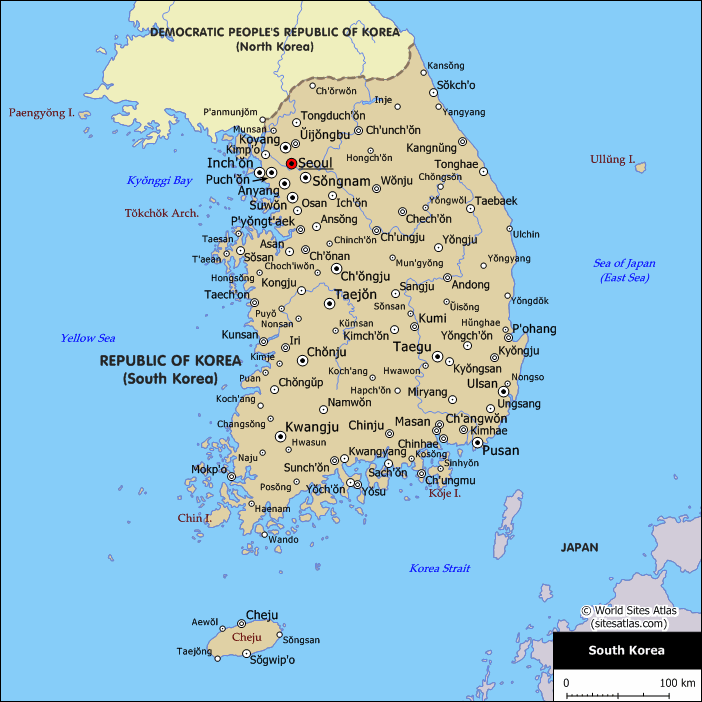
Just wanted to let you know that I am heading to Korea today and am unsure what my connectivity will look like for the foreseeable future. Any time I’m spending quality time in military lodging (and I will have 8 days of it, in this case), internet is a big question mark. I have tried to plan for a few postings in advance, but please forgive me if a day or 2 goes by without seeing anything new on the site. If you’re trying to contact me during this time, please be patient. I promise I will respond just as soon as I can. And for those of you celebrating, a happy Passover and/or Easter–I’ll let you know just what exactly my own seder ends up looking like:)
[image from siteatlas.com]
I’m a little bit addicted to The Moth podcasts. If you’ve never listened to them, I encourage you to spend a little time on their site, perusing people’s stories. This week’s story is by Barbara Wiener (MP3), and it’s described on the site as, “a perfectionist finds strength and self-acceptance after an assault”. Take 12 minutes or so and listen.
April is also National Child Abuse Prevention Month here in the US. The Child Welfare Information Gateway has a variety of resources on their site related to prevention, including their Network for Action 2012 Resource Guide. For some clinician-specific info, check out the American Academy of Pediatrics’ page on prevention.
Hear My Voice
Man, do I love this new campaign: Hear My Voice is a project of Break the Cycle, and it’s specifically focusing on empowering LGBTQ youth to create healthy, safe relationships, and providing resources for those who need them. Add this to your arsenal of quality patient information, and make sure to check out some of the tools on the site for yourself, including the teen– and young adult-specific safety plans (PDF). Although the site only has 3 city-specific resource pages (Chicago, Austin and LA), there are plenty of national resources, and links to other information and service providers.
One of the things I really appreciate about Twitter is the ability to follow the happenings at a conference I can’t attend. And so it is with the National Conference on Health and Domestic Violence, going on this week in San Francisco. If you search #NCHDV on Twitter you’ll find some great points presented at the conference, links to articles referenced and more. Twitter will never be a great substitute for actual attendance, but at least I can follow along and get a pretty wide array of perspectives in the process.
The Fight Against Bullies
The movie Bully opens in the US tomorrow and Clear Channel and Care.com are making contributions to an anti-bullying organization every time someone watches the trailer on their page. Check out the movie trailer and info about the campaign here.